
01 / THE NAME
Where Did the Name Begin?
Different accounts describe the name in different ways. Stories overlap, change in retelling and sometimes contradict one another.
L · LEGEND
One Old City · Two Underground Narratives
Tufuzi and Mawangdui: two routes into Changsha's buried past.
Through the GatePrologue Beneath the Gate
CHAPTER 00 · THE OLD CITY
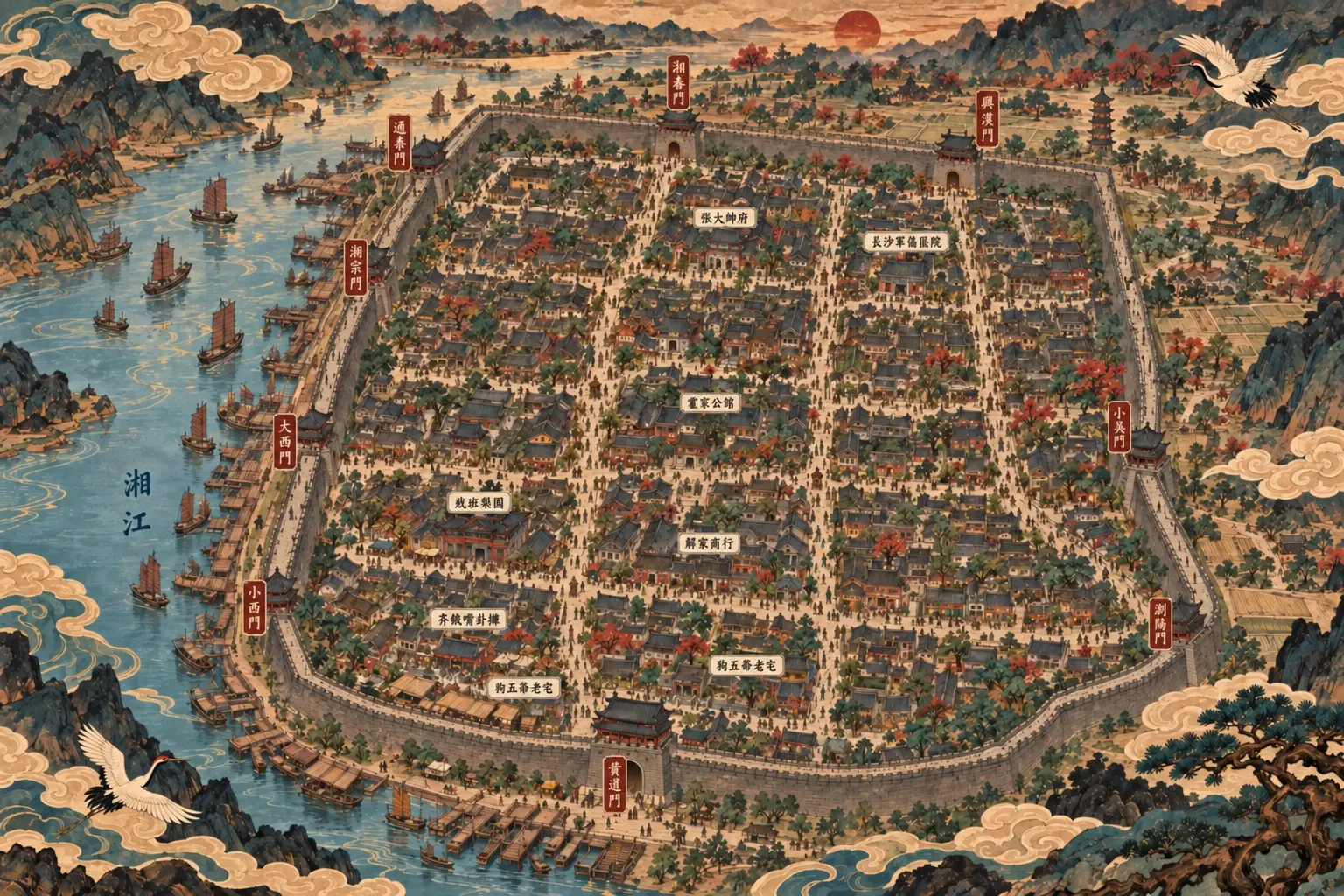
Follow the Xiang River and the old city gates through three layers: the city above, the world below, and the stories that remain.
The map is used as a narrative guide rather than a precise archaeological reconstruction.
CHAPTER 01 · PEOPLE WHO READ THE EARTH
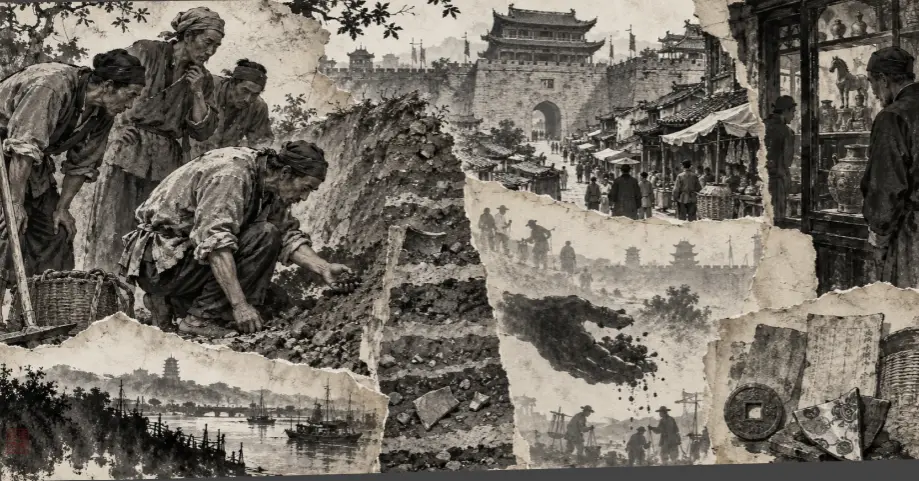
In stories of old Changsha, experience, local knowledge, antiquities and legend formed another way of understanding what might exist beneath the ground.
 TUFUZI · OLD CHANGSHA
01 / THE NAME
Different accounts describe the name in different ways. Stories overlap, change in retelling and sometimes contradict one another.
L · LEGEND
02 / OBSERVATION
Terrain, soil, place names and accumulated local experience could become clues for people attempting to understand what was hidden underground.
O · ORAL HISTORY
03 / CIRCULATION
Once an object is separated from its original location, relationships between the object, the burial and surrounding remains may also disappear.
F · HISTORICAL CLUE
When an object leaves the earth, part of its original context may leave with it.
TWO UNDERGROUND NARRATIVES
THE FOLK PATH
Knowledge passes through observation and storytelling. Meanings can change as stories move from one person and one generation to another.
THE ARCHAEOLOGICAL PATH
Archaeological work records where remains are found and studies their relationships to layers, structures and surrounding objects.
MAWANGDUI · CHANGSHA
FIELD RECORD / TOMB NO. 1
Each layer anchors the objects to a place and moment.
MAWANGDUI / OBJECT REGISTER
Food, vessels & feasting
Textiles, craft & the body
Music, attendants & ritual
Learning, medicine & ideas
CHAPTER 03 · THE EXCAVATION
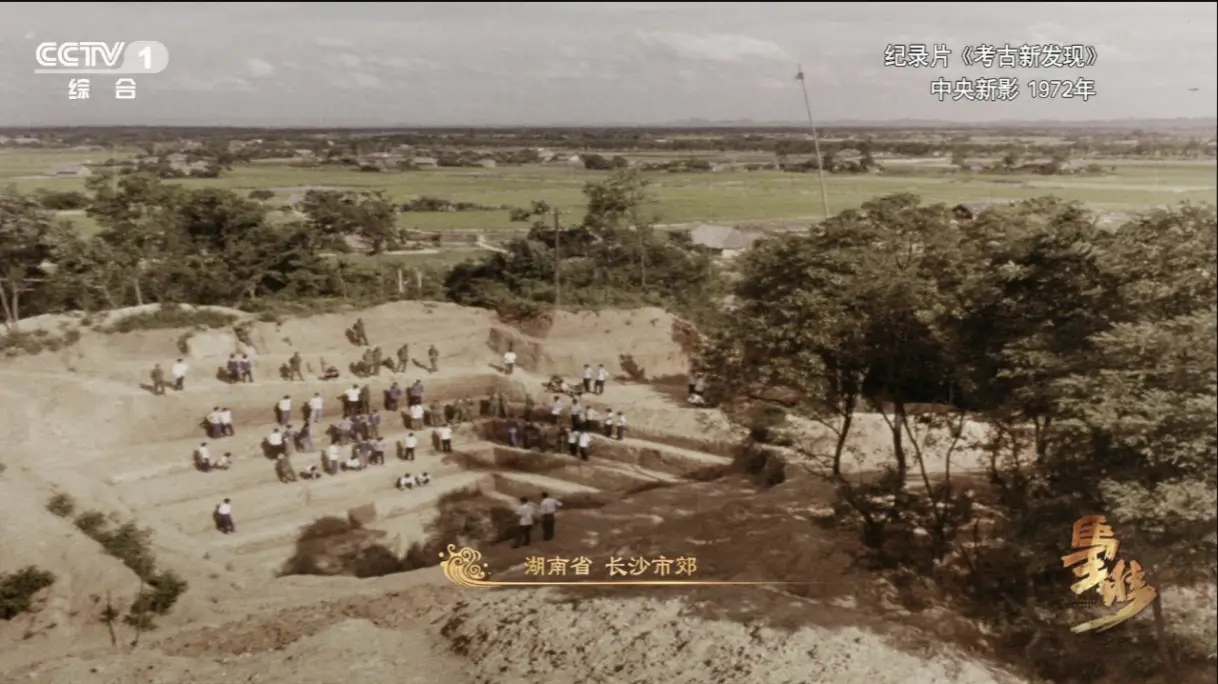
From 1972 to 1974, archaeologists excavated three Western Han tombs at Mawangdui. The mound became a record of people, objects, and burial practice.
Explore the Three Tombs →TOMB NO. 1 · BENEATH THE MOUND
In Tomb No. 1, white clay, charcoal, and nested coffins formed a carefully sealed burial. Recording their positions preserved the context of each find.
Inspect the Tomb Layers →THE FINDS · A WESTERN HAN ARCHIVE
Lacquerware, gauze garments, wooden figures, and manuscripts open a view of food, dress, ritual, and knowledge in early Han Changsha.
Open the Artifact Archive →FINAL ARCHIVE
Changsha's underground past can be approached through stories and through archaeological evidence. The two paths do not work in the same way, but both shape how the buried city is remembered.
LEGEND
Stories preserve impressions, experiences and mysteries surrounding the old city.
FACT
Excavation preserves relationships between layers, locations, structures and objects.
ARTIFACT
Objects reconnect the present with lives that existed in Changsha more than two thousand years ago.